


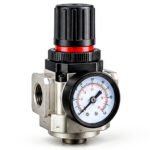
Air Preparation Explained: Filters, Regulators and Lubricators (FRL)
August 20, 2026

Unplanned downtime in a pneumatic system usually announces itself weeks before it happens: pressure drifts, cycle times lengthen, leakage increases. The problem is that nobody is watching. Condition monitoring is the practice of watching deliberately.
What is worth measuring
Pressure at the point of use
Regulated pressure at the machine, not at the compressor, reveals clogging filters, undersized piping and regulator drift. A slow downward trend is an early warning.
Air consumption and leakage
Flow monitoring during non-production periods exposes leaks directly. Leakage is typically the largest avoidable energy cost in a pneumatic plant and it grows silently.
Cycle time and valve response
Increasing actuation time points to seal wear, contamination or a failing coil before the valve stops working entirely.
Cycle counts
Comparing cycles against rated life turns maintenance from guesswork into planning.
How to implement without a big project
- Start with the asset that causes the most downtime, not the most modern one
- Use IO-Link capable sensors and valves where available — they carry diagnostics over the existing cable
- Set alarm thresholds from a baseline period of normal running, not from the datasheet
- Route alerts to the people who can act, not to a dashboard nobody opens
The economics
Condition monitoring rarely pays back through labour savings alone. It pays back through avoided production loss. A single prevented stoppage on a critical line usually covers the instrumentation cost for the whole machine.
What to avoid
- Instrumenting everything at once and drowning in data
- Monitoring without a defined response to each alarm
- Buying a platform before deciding which questions you need answered
Start narrow, prove the saving on one asset, then standardise. The plants that succeed with IIoT are the ones that solved a specific problem first.


